Abdul Rehman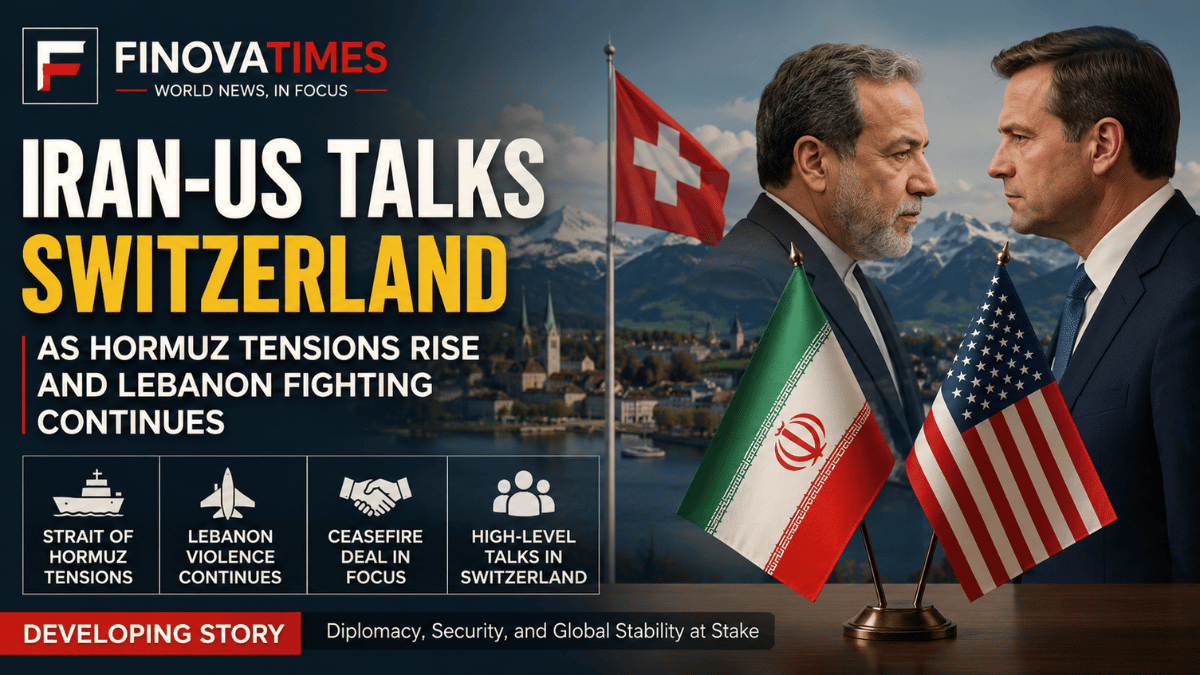
Iran-US Talks Switzerland begin amid Hormuz tensions and Lebanon clashes as global oil markets closely monitor ceasefire negotiations.
Iranian Delegation Arrives for High-Level Negotiations
Iran’s negotiating team departed for Switzerland on Saturday, according to state media reports. The delegation is being led by parliamentary speaker and chief negotiator Mohammad Baqer Qalibaf. Foreign Minister Abbas Araqchi and several senior officials from Iran’s security, oil, and financial sectors are also participating.
The Swiss meeting is expected to focus on implementing the recently announced interim agreement between Tehran and Washington.. The deal was brokered through diplomatic efforts involving Pakistan and is designed to halt escalating hostilities while opening the door for broader discussions.
Officials from both sides hope the negotiations can create a foundation for longer-term talks on security, regional stability, and Iran’s nuclear program.
Iran-US Switzerland Begin as Hormuz Tensions Rise
Iran-US talks are set to begin as senior officials from both countries travel to Switzerland for a new round of negotiations aimed at preserving a fragile ceasefire and reducing tensions across the Middle East.
The talks come at a critical moment. Despite increasing progress in diplomacy, the outbreak of violence in Lebanon as well as new threats concerning the Strait of Hormuz are adding to the worries about regional security and energy supply.
Strait of Hormuz Warning Raises Global Concerns
Ahead of the negotiations, Iran’s Revolutionary Guard issued strong warnings regarding the Strait of Hormuz, one of the world’s most important energy shipping routes.
The organization claimed the waterway had been shut and warned commercial vessels against approaching the area.Such statements instantly caught global media’s attention because nearly one-fifth of global oil production goes through that vital waterway.
However, U.S. Central Command rejected those claims and reported that dozens of merchant ships successfully transited the strait during the day. According to U.S. officials, more than 17 million barrels of oil moved through the route without major disruption.
Energy analysts continue to monitor developments closely. Any prolonged interruption in shipping traffic could impact oil prices, fuel costs, and global markets.
U.S. Officials Express Confidence
U.S. Vice President JD Vance indicated that he may travel to Switzerland soon as diplomatic preparations continue.
Speaking during a television interview, Vance said he remains confident that the ceasefire agreement can hold despite ongoing tensions. He also stated that he had seen no evidence suggesting that the Strait of Hormuz was fully closed.
American negotiators are already working in Switzerland on technical aspects of the discussions. Officials involved in the process believe progress is being made, although significant challenges remain.
The current diplomatic framework includes plans for approximately 60 days of structured talks covering Iran’s nuclear program and several broader regional issues.
Lebanon Violence Threatens Ceasefire Efforts
Despite diplomatic progress, fighting in Lebanon remains a major obstacle.
Reports from Lebanon indicate that Israeli strikes continued in several areas following the announcement of a ceasefire arrangement. Lebanese emergency services reported casualties, while local officials described ongoing military activity in southern regions and the Bekaa Valley.
Israel stated that its actions were a response to attacks launched by Hezbollah. The Iran-backed group has also signaled that it intends to continue resisting Israeli military operations.
He also confirmed that there was no information available for him indicating that the Strait of Hormuz had been totally closed. One of the key conditions for continued U.S.-Iran negotiations is a reduction in violence across regional conflict zones, including Lebanon.
Why These Talks Matter
The Switzerland negotiations could become one of the most important diplomatic developments in the Middle East this year.
Success would help reduce the risk of wider regional conflict, improve security conditions, and provide stability for global energy markets. It could also open the door to future agreements on nuclear oversight and economic cooperation.
Failure, however, could increase geopolitical tensions and create fresh uncertainty for oil markets, investors, and governments around the world.
Outlook
For now, attention remains focused on Switzerland. Diplomats from both sides face the difficult task of turning a fragile ceasefire into a lasting political process.
The coming days will reveal whether diplomacy can overcome deep mistrust and regional tensions. With the Strait of Hormuz, Lebanon, and broader Middle East security all linked to the outcome, the stakes could hardly be higher.
The strategic importance of the Strait of Hormuz has been highlighted by the International Energy Agency, which closely monitors global energy supply routes.
According to U.S. Central Command, commercial shipping activity in the region has continued despite rising tensions.
Read more: Plane Crashes Today: 8 Dead in California B-2 bomber Crash.

Abdul Rehman is the founder and editor of FinovaTimes a digital-first financial media platform covering global markets, artificial intelligence, investing, business, and economic trends.
With a strong focus on modern financial journalism and data-driven storytelling, he specializes in translating complex market developments into clear, accessible insights for a global audience. His editorial work spans AI innovation, Wall Street trends, stock market analysis, macroeconomics, and emerging technologies shaping the future of finance.
Under his leadership, FinovaTimes has developed a modern newsroom approach inspired by leading global financial media brands, combining real-time reporting, high-impact digital publishing, and audience-focused financial content.
His work emphasizes clarity, credibility, and forward-looking analysis across the rapidly evolving global economy.