 Abdul Rehman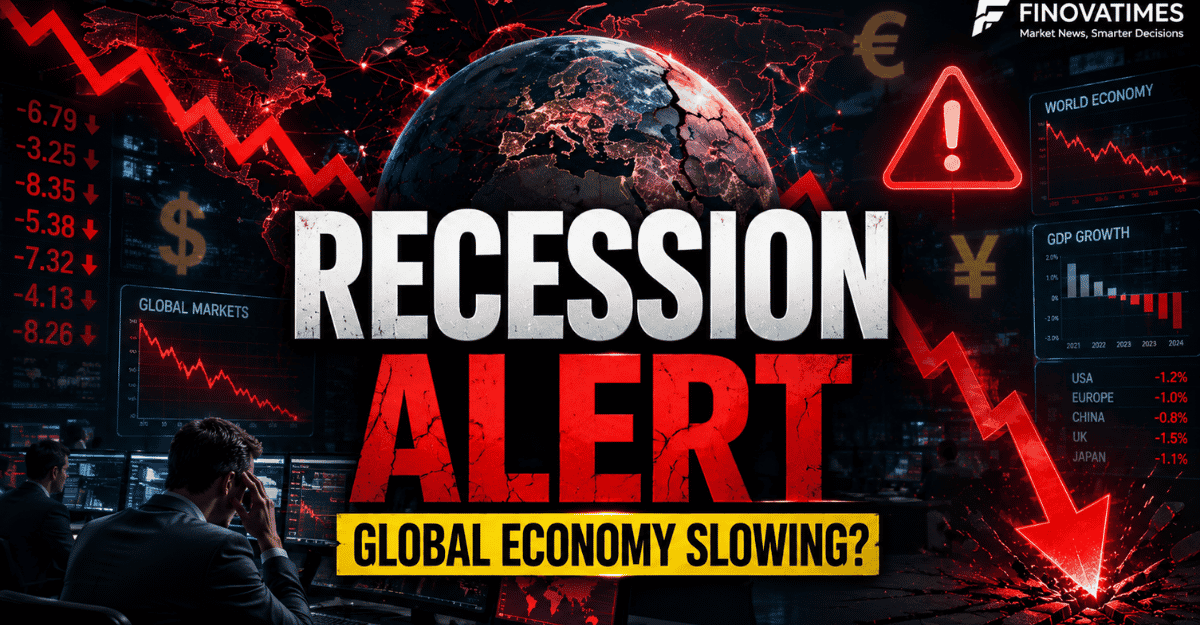
Global Recession Warning grows as inflation, rising debt, and weak consumer spending raise ferars of another wordwide economic slowdown.
Global Recession Warning: Is There a Slowdown on the Horizon?
The Global Recession Warning is once again emerging as a big topic among investors, businesses, and governments around the world. The reasons for this are inflationary trends, slow economic growth, poor consumer spending, and mounting national debts.
From America to Europe to Asia, economists are predicting the coming of yet another tough period for the world economy if present financial situations continue worsening.
Reasons Behind the Increasing Global Recession Concerns
The latest Global Recession Warning follows the emergence of certain weaknesses from different economic factors.
These factors include:
- Rising levels of inflation
- Slow pace of GDP growth
- Government debts
- Poor spending
- Interest rate hikes
World central banks have already been raising interest rates for several years now, trying to curb the rise in inflation rates. Unfortunately, these hikes in interest rates are beginning to affect economic performance and prevent companies from growing.
Analysts argue that the world economy is currently at a critical point which can be easily affected by any disturbance.
Inflation Continues To Put Pressure On Consumers
Another major cause contributing to the Global Recession Warning is the continuous rise in prices. Despite the slight fall in inflation rates, costs of food, accommodation, fuel, and services are still quite high.
Consumers are now saving more because:
- There is an increase in household costs
- Credit cards usage is going up
- Saving levels are decreasing
- It’s becoming more costly to make repayments on loans
Slow consumer spending indicates economic instability since consumer spending helps stimulate economic growth.
Slow Economic Growth Global Recession Warning
Slower economic growth in multiple major regions is another reason why there is a Global Recession Warning.
Some examples of regions experiencing economic problems include:
Manufacturing performance has dropped for many countries, and businesses are reluctant to invest in new projects because of the lack of confidence in future spending.
Economic recovery in China has been lower than expected.
Higher Global Debt Levels Bring More Risks
A third important factor contributing to the Global Recession Warning involves increasing global debt levels.
Countries and organizations took on heavy debts during past recessions. With interest rates going up, debt repayment is getting harder than before.
It has been warned that:
Countries that have incurred large amounts of debt could face financial issues
Companies would cut back their employment and investments
Financial markets could become more unpredictable
The global economy would be affected by further instabilities if debt-related issues continue.
Market Volatility with Investors Looking at Economic Indicators
Investors are currently focusing on economic news and monetary policies. In view of the Global Recession Warning, market fluctuations have been seen due to inflation figures, unemployment figures, and company earnings.
These industries have come under pressure:
- Consumer retail stocks
- Property developers
- Factories and industrial producers
- Small businesses
On the other hand, sectors such as healthcare and utilities are being preferred during uncertain economic times.
Are Central Banks Capable of Preventing Recession?
For central banks like the Federal Reserve and the European Central Bank, balancing various economic factors is a tough job. They need to take into account:
- Inflation
- Economic development
- Employment
- Financial stability
The problem arises when the interest rate stays high as it can affect economic performance. Lowering interest rates prematurely can cause inflation.
Conclusion
The Global Recession Warning is the reflection of worries about the state of the world’s economy. Even though a recession is not expected, economic situation is rather fragile due to inflation, debts, and low economic growth.
It will be safe to assume that investors will be on guard until there are clearer signals of recovery.
For now, the world economy sits at a crossroads when current financial decisions might determine market condition in the next few years.
AI Spending Boom Risk: $1 Trillion Bet Could Trigger Market Crash

Abdul Rehman is the founder and editor of FinovaTimes a digital-first financial media platform covering global markets, artificial intelligence, investing, business, and economic trends.
With a strong focus on modern financial journalism and data-driven storytelling, he specializes in translating complex market developments into clear, accessible insights for a global audience. His editorial work spans AI innovation, Wall Street trends, stock market analysis, macroeconomics, and emerging technologies shaping the future of finance.
Under his leadership, FinovaTimes has developed a modern newsroom approach inspired by leading global financial media brands, combining real-time reporting, high-impact digital publishing, and audience-focused financial content.
His work emphasizes clarity, credibility, and forward-looking analysis across the rapidly evolving global economy.











The current global economic situation is definitely worrying! 📉 Rising inflation, debt burdens, and sluggish growth have created an atmosphere of uncertainty among investors. This article does a great job of explaining how the world economy is at a critical crossroads where a single wrong move could have a significant impact. It will be interesting to see how central banks navigate this delicate balance. Staying cautious and informed is definitely the wisest approach right now! 💸🌍🤔
Thank you for sharing your thoughtful perspective with FinovaTimes! 🌍📉
You’re absolutely right — the global economy is walking a very fine line right now, with inflation, rising debt, and slowing growth creating major uncertainty across markets. Central banks will play a crucial role in shaping what comes next.
At FinovaTimes, we’ll continue bringing timely insights and market analysis to help readers stay informed in these uncertain times. 💸📊