Abdul Rehman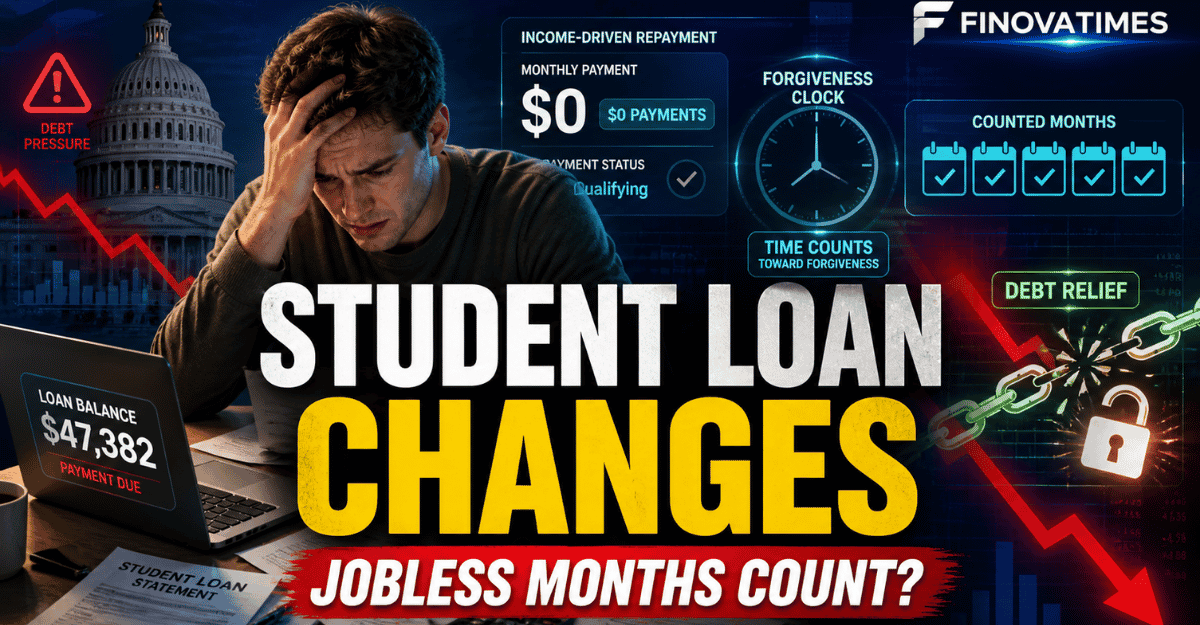
Student loan forgiveness changes may help laid-off workers by counting jobless months toward debt relief. new bill could speed up repayment.
Proposed Student Loan Forgiveness Changes May Impact Millions
Student loan forgiveness changes are gaining attention across the United States, especially among middle-income borrowers struggling with rising living costs and job insecurity. A recent House bill aims to fix a major issue in the current repayment system — the effect of unemployment on loan forgiveness progress.
Currently, millions of Americans use Income-Driven Repayment (IDR) plans that require monthly payments based on income. However, when borrowers lose their jobs, they can temporarily make $0 payments through unemployment deferment. Unfortunately, those months usually do not count toward the 20–25 year loan forgiveness timeline.
Impact of the Proposed Student Loan Forgiveness Changes
At present, borrowers can request unemployment deferment during financial hardship. Although this option allows $0 monthly payments, it delays progress toward loan forgiveness because those months are excluded from the forgiveness period.
To solve this problem, the proposed student loan forgiveness changes would allow qualifying unemployed borrowers to continue earning forgiveness credit even while making $0 payments under IDR plans.
Under the proposal:
- Losing a job would no longer pause forgiveness progress.
- Eligible $0 payments during unemployment could count toward loan forgiveness.
- Borrowers may receive debt relief more easily during financial hardship.
Details About the Proposed Bill
The proposed legislation, officially known as H.R. 8475 (Savings Opportunity and Affordable Repayment Act), seeks to amend the Higher Education Act of 1965.
Key highlights of the bill include:
- Counting unemployment months toward loan forgiveness
- Faster loan forgiveness for some borrowers within 15 years
- Greater flexibility in income-based repayment plans
Supporters of the bill argue that these student loan forgiveness changes could reduce financial pressure on struggling Americans.
Why This Issue Matters
The proposal arrives during a period of economic uncertainty in the United States. Several industries, including technology, retail, and media, continue to experience layoffs.
Recent economic concerns include:
- Rising layoffs across multiple industries
- Inflation increasing household expenses
- A higher unemployment rate and financial instability
As a result, many borrowers face both income loss and long-term student debt challenges. The proposed changes aim to prevent unemployment from delaying debt relief.
How the Current IDR System Works
Income-Driven Repayment (IDR) plans help borrowers manage federal student loan payments according to their earnings.
Under the current system:
- Borrowers pay a percentage of their income
- Payments can drop to $0 during financial hardship
- Remaining balances may be forgiven after 20–25 years
However, not every $0 payment period currently counts toward forgiveness. Therefore, the new student loan forgiveness changes seek to close this gap.
How Borrowers Could Benefit
If Congress approves the bill, borrowers would likely need to:
- Enroll in a federal IDR plan
- Update income and employment information regularly
- Track qualifying payment months through loan servicers
- Apply through the official federal student aid website
Where to Apply
Borrowers can review eligibility requirements and repayment options through the official federal student aid portal at StudentAid.gov.
Will the Bill Become Law?
Although several lawmakers support the proposal, the bill still faces political and legislative challenges. Since Democratic lawmakers introduced the measure, it may face opposition in Congress before becoming law.
Still, similar student loan forgiveness reforms have gained public attention in recent years, especially as economic pressures continue affecting American households.
FAQs
Q1. Could unemployment months count toward loan forgiveness?
Yes. Under the proposed bill, eligible unemployment months with $0 IDR payments could count toward loan forgiveness progress.
Q2. How can borrowers apply for student loan forgiveness?
Borrowers must enroll in a qualifying IDR plan and apply through the official federal student aid website at U.S. Department of Education Student Aid Portal.
Jim Cramer Stock Market Trends: Nvidia, OpenAI

Abdul Rehman is the founder and editor of FinovaTimes a digital-first financial media platform covering global markets, artificial intelligence, investing, business, and economic trends.
With a strong focus on modern financial journalism and data-driven storytelling, he specializes in translating complex market developments into clear, accessible insights for a global audience. His editorial work spans AI innovation, Wall Street trends, stock market analysis, macroeconomics, and emerging technologies shaping the future of finance.
Under his leadership, FinovaTimes has developed a modern newsroom approach inspired by leading global financial media brands, combining real-time reporting, high-impact digital publishing, and audience-focused financial content.
His work emphasizes clarity, credibility, and forward-looking analysis across the rapidly evolving global economy.