Abdul Rehman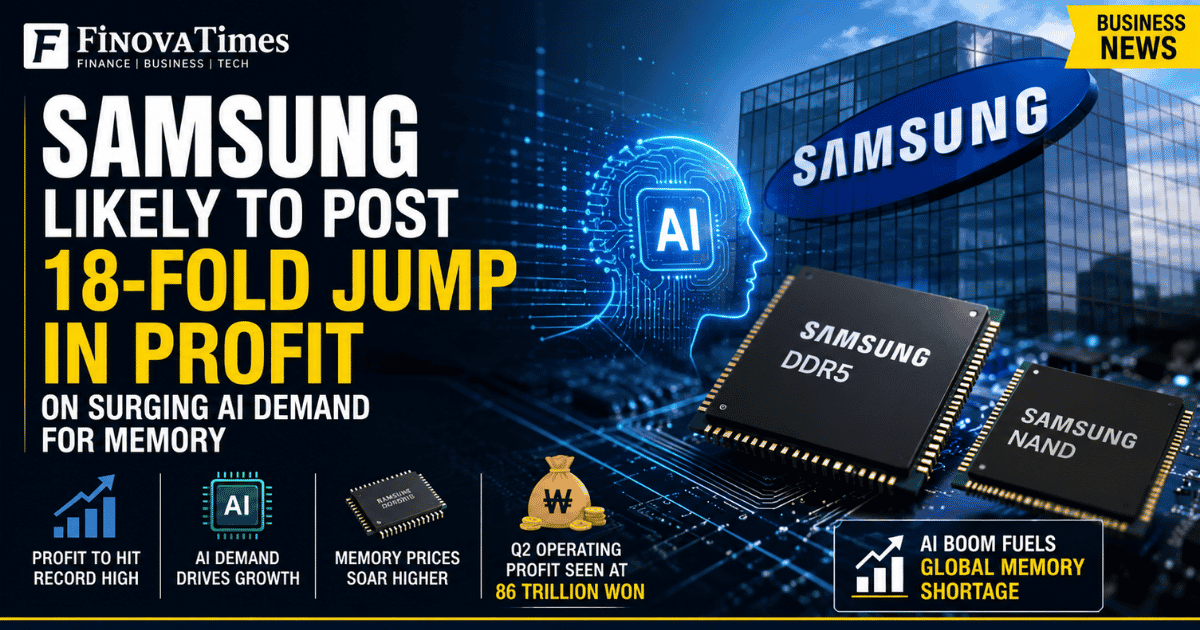
Samsung AI memory Profits are forecast to rise 18 times in Q2 due to the demand for artificial intelligence chips. Read the whole report below
Samsung AI Memory Profit Surges as AI Demand Drives Record Growth
Samsung Electronics is expected to report one of its strongest quarterly performances ever, thanks to the explosive demand for artificial intelligence (AI) memory chips. According to market analysts, the company could post an 18-fold increase in operating profit for the second quarter of 2026, highlighting how the AI revolution is transforming the global semiconductor industry.
The biggest driver behind this remarkable growth is the continued shortage of high-performance memory chips, especially DRAM and NAND, which are essential for powering AI servers, cloud computing platforms, and advanced AI applications.
Samsung AI Memory Profit Expected to Reach a New Record
Samsung Electronics is expected to announce an operating profit of around 86 trillion won (approximately $56.3 billion) for the April-June quarter. In comparison, the company reported only 4.7 trillion won during the same period last year.
If these estimates are confirmed, this will become Samsung’s third consecutive quarter of record-breaking operating profit, reflecting the company’s strong position in the global memory chip market.
The impressive financial performance comes as AI companies continue investing heavily in data centers and high-performance computing infrastructure, increasing the demand for advanced memory products.
AI Boom Continues to Push Memory Chip Prices Higher
The rapid adoption of artificial intelligence has created an unexpected shortage of memory chips across the industry.
Unlike traditional computing, AI workloads require significantly larger amounts of memory to process massive datasets and generate responses quickly. This demand has pushed the prices of both DRAM and NAND flash memory sharply higher.
According to Citi Research:
DRAM average selling prices increased 44% quarter-over-quarter.
NAND prices climbed 53% during the same period.
Higher prices combined with strong customer demand have significantly boosted Samsung’s profitability.
Agentic AI Is Creating Even Greater Demand
One of the biggest reasons behind the memory shortage is the rise of Agentic AI.
Earlier AI models mainly focused on training large language models. However, newer AI systems are designed to perform multiple complex tasks independently.
These advanced AI applications require:
Larger memory capacity
Faster server processors
More storage for inference
Better data retrieval performance
As a result, cloud providers and technology companies continue purchasing more high-performance memory chips than manufacturers can currently produce.
Samsung Supplies Memory to the World’s Biggest Tech Companies
Samsung remains one of the world’s largest suppliers of memory chips used in AI infrastructure.
Its customers include major technology giants such as:
As these companies continue expanding their AI services, Samsung is expected to benefit from long-term demand for premium memory products.
Memory Shortage Could Continue Into Next Year
Industry experts believe the global supply of AI memory chips will remain tight throughout next year.
Even though manufacturers are increasing production, demand from AI data centers continues growing at a much faster pace.
To secure future supplies, Samsung has already signed several multi-year contracts with customers, although the company has not revealed their names or contract values.
This strategy helps Samsung lock in future revenue while reducing uncertainty in an increasingly competitive market.
Employee Bonuses May Affect Quarterly Earnings Samsung AI memory Profits
Although Samsung’s operating environment remains extremely strong, analysts say one factor could reduce reported earnings.
Earlier this year, Samsung reached a wage agreement with employees in its semiconductor division, avoiding a large-scale strike.
Under the agreement, 10.5% of the semiconductor division’s operating profit will be allocated toward special employee bonuses.
Some analysts estimate Samsung could record bonus-related provisions exceeding 40 trillion won, which may temporarily reduce reported profits depending on when those expenses are recognized.
Biggest Risk: Slower AI Infrastructure Spending
While the outlook remains positive, analysts are also watching one important risk.
Many investors are questioning whether today’s rapid pace of AI infrastructure investment can continue over the long term.
According to JPMorgan, AI memory could account for more than 70% of cloud providers’ capital expenditure next year.
If AI spending slows in the future, demand for memory chips could weaken, affecting companies like Samsung and SK Hynix.
For now, however, most analysts believe demand remains strong enough to support higher chip prices.
Samsung’s Smartphone Business Faces Margin Pressure
The AI memory business is booming, but Samsung’s smartphone division faces a different challenge.
As memory prices continue rising, manufacturing smartphones has become more expensive.
Although Samsung has already increased handset prices, analysts believe additional price hikes may be necessary during the second half of the year if component costs continue climbing.
This shows how the AI boom is benefiting Samsung’s semiconductor business while simultaneously increasing costs for its consumer electronics division.
Final Thoughts
Samsung AI memory Profits expected second-quarter results highlight how artificial intelligence is reshaping the semiconductor industry. Strong demand for AI servers, cloud computing, and advanced memory technologies has created one of the biggest memory shortages in recent years, allowing Samsung to achieve record profitability.
While risks such as slower AI investment and higher employee bonus costs remain, the overall outlook for Samsung’s memory business continues to be positive. If AI adoption keeps accelerating, demand for DRAM and NAND chips is likely to stay strong well into next year, helping Samsung maintain its leadership in the global semiconductor market.
Read More: Get caught up on the latest AI News, Semiconductor Industry News, and Technology Market Analysis to be informed about the latest trends in artificial intelligence and semiconductor manufacturing.
Source: This report is based on market analysis and information published by Reuters, along with industry insights from major financial research firms including Citi Research, JPMorgan, and Nomura.
Check out our Artificial Intelligence news page for latest developments in artificial intelligence.
Stay tuned to our Corporate News page for news on the world’s leading technology firms.
Editorial Note: The information contained herein is compiled from publicly available sources and market reports. All financial data and forecast information may be subject to revision upon release of Samsung Electronics‘ official financial results.
Disclaimer: The above content serves only as an information or educational resource. It does not constitute any financial advice whatsoever.

Abdul Rehman is the founder and editor of FinovaTimes a digital-first financial media platform covering global markets, artificial intelligence, investing, business, and economic trends.
With a strong focus on modern financial journalism and data-driven storytelling, he specializes in translating complex market developments into clear, accessible insights for a global audience. His editorial work spans AI innovation, Wall Street trends, stock market analysis, macroeconomics, and emerging technologies shaping the future of finance.
Under his leadership, FinovaTimes has developed a modern newsroom approach inspired by leading global financial media brands, combining real-time reporting, high-impact digital publishing, and audience-focused financial content.
His work emphasizes clarity, credibility, and forward-looking analysis across the rapidly evolving global economy.