Abdul Rehman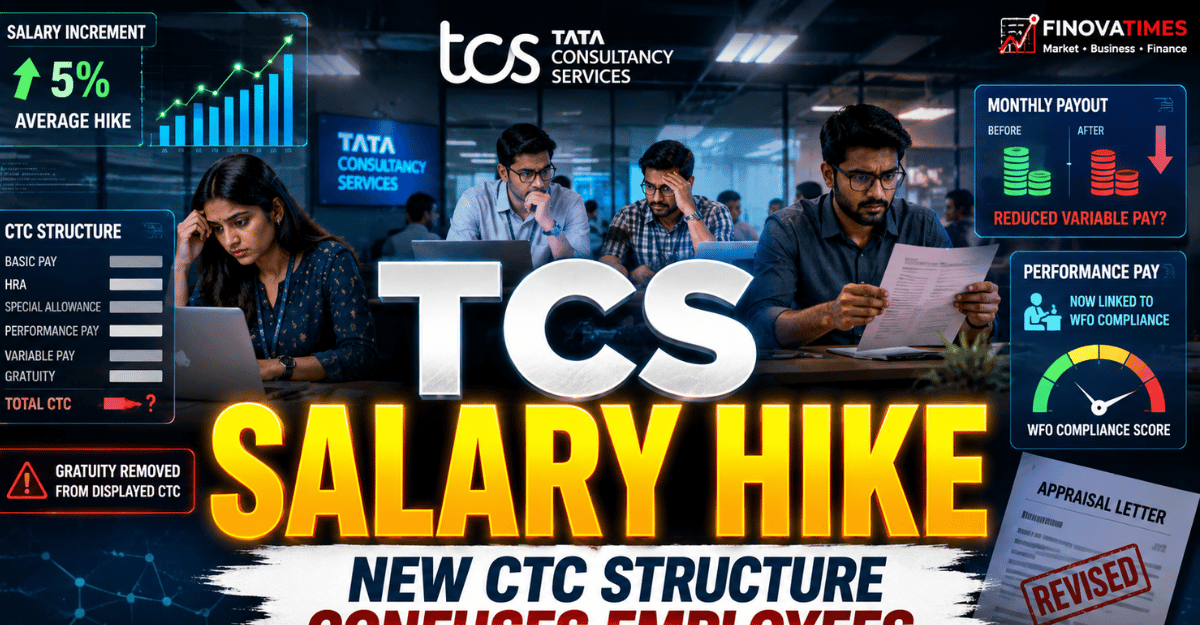
Tata consultancy services appraisal cycle brings average 5% salary hikes, but revised CTC structure and variable pay changes raise employee concerns.
TCS Appraisal Cycle 2026: Salary Hike Sparks CTC Confusion
The latest tata consultancy services appraisal cycle has become a major discussion point across India’s IT sector after TCS rolled out annual salary hikes averaging around 5 percent. While the company maintained that employees’ gross salary and take-home pay remain protected, several workers raised concerns over revised CTC structures, lower variable pay visibility, and changes in compensation components.
Tata Consultancy Services, India’s largest IT services company by workforce, announced the salary revisions during a period when the broader IT industry is facing weak discretionary spending, delayed client decisions, and pressure on operating margins. This makes the latest appraisal cycle important not only for TCS employees but also for the overall Indian technology sector.
read more: Spirit Airlines Flights Crisis: Trump’s Proposed Airline Bailout Plan Falls Flat
TCS Salary Hike Details
As per reports, TCS has given salary hikes based on employee performance bands. Employees in the A+ band reportedly received hikes of around 10 percent, while A-band employees received more than 7 percent on average.
B-band employees reportedly received around 3 percent increments, while C-band employees saw very limited hikes of nearly 0.3 percent. Overall, the company’s average salary hike is estimated to be close to 5 percent.
This comes after TCS delayed salary increments in the previous fiscal year. The latest wage revision shows that the company is continuing its annual appraisal process, even as many other Indian IT firms remain cautious about salary hikes.
Revised CTC Structure Explained
The main confusion around the tata consultancy services appraisal cycle is linked to the company’s revised CTC format.
TCS changed the way it shows salary components in appraisal letters. Earlier, the company included gratuity inside the total CTC. Now, TCS has removed gratuity from the visible CTC structure. However, the company has said that gratuity contributions will continue and employees’ gross and net salaries remain protected.
As a result, many salary letters now look different. However, TCS says employee take-home pay remains unchanged.
Why Employees Are Concerned
Many employees feel worried because the revised CTC looks lower than previous salary letters. This can create confusion during job switches, salary negotiations, or when employees compare their compensation with market standards.
Some workers also claimed that their salary appeared lower after the new structure, while others raised concerns about reduced variable pay and changes in allowances.
For employees, salary letters are not just internal documents. They are often used during future hiring discussions, loan applications, and financial planning. That is why even a structural change in CTC can create serious concern.
Variable Pay Debate
Another key concern is related to variable pay. Some employees claimed that monthly variable pay components have reduced or shifted toward quarterly or annual payouts.
There are also concerns that performance-linked payouts may be connected with work-from-office compliance. If true, this would mean employee bonuses could depend not only on performance but also on attendance and office presence.
This issue is important because variable pay forms a major part of compensation for many IT employees. Any change in payout timing or calculation can directly impact monthly financial planning.
Company’s Response
TCS has maintained that the salary hikes were rolled out in line with earlier company announcements. The company also said that it has completed compensation restructuring for India-based employees to align with new labour code requirements.
A TCS spokesperson said the company has consistently awarded annual increments to employees and remains committed to long-term employee growth.
The company’s position is clear: the salary structure has changed for compliance reasons, but employees’ gross and net pay are protected.
IT Sector Context
The latest TCS salary hike comes at a time when India’s IT services industry is moving carefully on compensation. Companies are facing slower client spending, uncertain global demand, and margin pressure.
Infosys, HCLTech, and Tech Mahindra have also indicated cautious approaches toward salary hikes. This shows that the entire sector is currently balancing employee expectations with business challenges.
For TCS, the appraisal cycle is especially important because the company has a massive employee base of more than 5.84 lakh workers. Any change in salary structure naturally affects a large number of professionals and attracts industry-wide attention.
Why This Matters Tata Consultancy Services Appraisal
The tata consultancy services appraisal cycle highlights a bigger issue in India’s corporate salary system: the difference between actual take-home pay and displayed CTC.
Employees often judge their compensation based on the total CTC figure, while companies may structure salary components differently based on compliance, benefits, taxes, and long-term employee obligations.
This is why transparent communication becomes very important. If employees do not clearly understand what has changed and what has not, even a salary hike can lead to confusion.
Final Takeaway
TCS has rolled out average salary hikes of around 5 percent, but the revised compensation structure has raised concerns among employees. The company says salaries are protected, while workers are questioning lower displayed CTC, variable pay changes, and the possible impact on future salary negotiations.
The issue shows how important clarity is during appraisal cycles, especially in a large company like Tata Consultancy Services.
Read our latest coverage on global IT layoffs, AI hiring trends, and technology sector salary updates in the Tech section of FinovaTimes.
For broader corporate earnings and IT industry updates, readers can also follow reports from Reuters, Bloomberg, and Moneycontrol.

Abdul Rehman is the founder and editor of FinovaTimes a digital-first financial media platform covering global markets, artificial intelligence, investing, business, and economic trends.
With a strong focus on modern financial journalism and data-driven storytelling, he specializes in translating complex market developments into clear, accessible insights for a global audience. His editorial work spans AI innovation, Wall Street trends, stock market analysis, macroeconomics, and emerging technologies shaping the future of finance.
Under his leadership, FinovaTimes has developed a modern newsroom approach inspired by leading global financial media brands, combining real-time reporting, high-impact digital publishing, and audience-focused financial content.
His work emphasizes clarity, credibility, and forward-looking analysis across the rapidly evolving global economy.