Abdul Rehman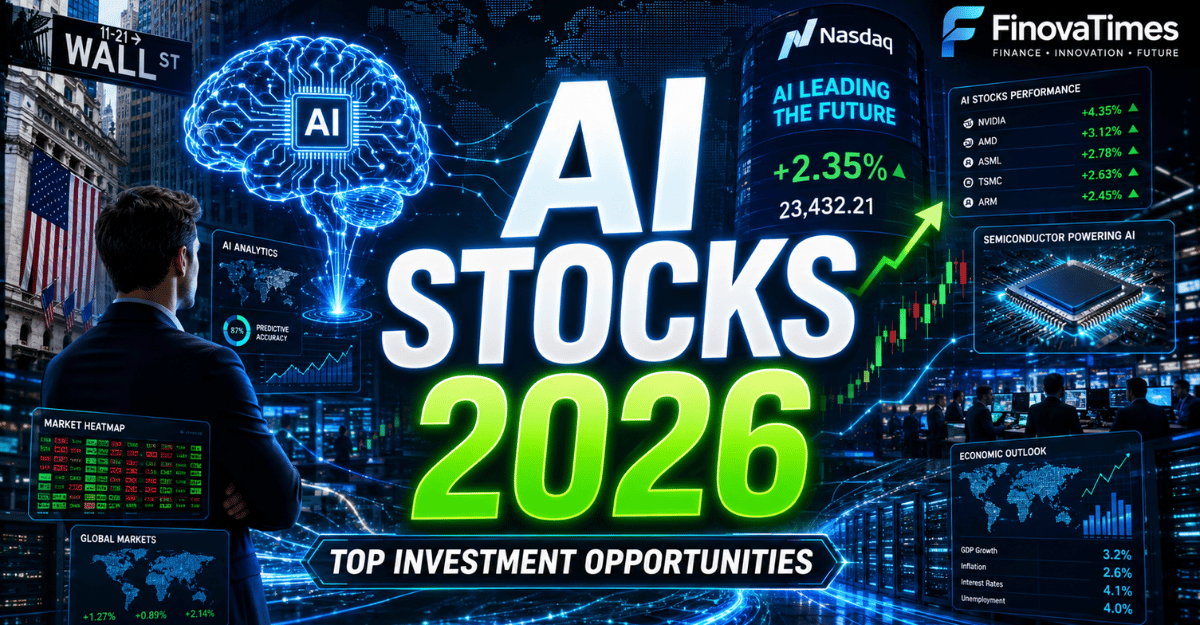
Investing in AI Stocks in 2026 is attracting global investors as AI technologies transform industries, Wall Street, and future market growth.
Investing in AI Stocks in 2026: Major Risks You Should Know
Artificial Intelligence is no longer just a futuristic concept. In 2026, AI has become one of the biggest drivers of global economic growth, transforming industries like healthcare, finance, cybersecurity, cloud computing, robotics, and digital marketing. As companies continue investing billions into AI infrastructure, many investors are now focusing on Investing in AI Stocks in 2026 as a long-term wealth-building opportunity.
From Wall Street giants to innovative startups, AI-related businesses are experiencing rapid expansion. Companies involved in machine learning, AI chips, automation, cloud computing, and data analytics are attracting massive investor attention. However, while the growth potential looks promising, understanding both the opportunities and risks is essential before making investment decisions.
In this article, we will explore the major reasons behind the AI investment boom, market trends, risks, and strategies that can help investors make informed decisions in 2026.
The Rise of AI Technologies and Market Trends
The rapid growth of AI technologies is one of the biggest reasons why experts are discussing Investing in AI Stocks in 2026 more than ever before. Artificial Intelligence is now deeply integrated into modern businesses, helping companies improve productivity, reduce operational costs, and automate complex tasks.
Major technology firms like NVIDIA, Microsoft, Google, Meta, and Amazon are heavily investing in AI infrastructure. At the same time, governments across the world are supporting AI innovation through research funding and digital transformation programs.
According to recent market trends, AI-related sectors are witnessing strong revenue growth due to increasing demand for:
- AI cloud services
- Machine learning software
- AI-powered cybersecurity
- Data centers and semiconductor chips
- Automation tools and robotics
Investors are particularly paying attention to semiconductor companies because AI systems require powerful GPUs and advanced chips. This demand has significantly boosted the stock performance of several tech firms over the past few years.
For more updates on technology market trends, investors can also follow:
NVIDIA Official Website
Microsoft AI News
FinovaTimes Tech Section
Another major trend supporting Investing in AI Stocks in 2026 is the rise of generative AI tools. Businesses are now using AI for customer support, content generation, financial forecasting, healthcare diagnostics, and even autonomous systems.
Additionally, Wall Street analysts believe AI could become one of the largest economic revolutions since the internet boom. Many investors see AI stocks as long-term growth assets capable of delivering strong returns over the next decade.
Why Investors Should Consider AI Stocks
There are several compelling reasons why investors are focusing on Investing in AI Stocks in 2026. The AI sector continues expanding rapidly, and many companies are reporting strong earnings growth due to AI-related demand.
- Massive Market Growth Potential
AI is expected to become a multi-trillion-dollar industry in the coming years. Companies building AI infrastructure, software, and cloud systems may continue benefiting from rising enterprise demand.
- Strong Institutional Investment
Large investment firms and hedge funds are increasingly allocating money toward AI-focused companies. This institutional interest is helping boost market confidence in the AI sector.
- Innovation Across Multiple Industries
AI is not limited to technology companies only. Industries like healthcare, banking, manufacturing, logistics, and cybersecurity are rapidly adopting AI systems. This creates opportunities across multiple stock categories.
- Rising Demand for AI Chips
The global race for advanced AI chips has created huge opportunities for semiconductor firms. Companies manufacturing GPUs and AI processors are seeing significant revenue growth.
- Long-Term Economic Transformation
Many analysts believe Artificial Intelligence could permanently reshape the global economy. Investors who enter the market early may benefit from long-term technological adoption trends.
For financial market analysis and investment news, readers can also explore:
Bloomberg Markets
Reuters Technology News
CNBC Investing Section
Despite the excitement, investors should still maintain realistic expectations. Some AI stocks may become overvalued due to hype, making proper research extremely important before investing.
Identifying Risks Investing in AI Stocks
Although Investing in AI Stocks in 2026 offers strong growth potential, investors must also understand the risks associated with the sector.
Market Volatility
AI stocks can experience sharp price swings due to earnings reports, government regulations, or changing investor sentiment. Technology stocks are often highly volatile during uncertain economic conditions.
Overvaluation Concerns
Some AI companies may trade at extremely high valuations compared to their actual earnings. This creates the risk of market corrections if growth expectations slow down.
Regulatory Challenges
Governments worldwide are considering stricter AI regulations related to privacy, security, and ethical concerns. New policies could impact certain companies operating in the AI sector.
Competition Risk
The AI industry is becoming highly competitive. Large tech firms and startups are all racing to dominate the market, which may reduce profit margins for some companies.
Economic Uncertainty
Interest rates, inflation, and global economic slowdowns can also affect technology stocks. Investors should monitor macroeconomic trends carefully.
Before investing, it is important to diversify portfolios rather than depending entirely on one sector. Investors should analyze company fundamentals, revenue growth, debt levels, and future business strategies.
Strategies for Investing in AI Stocks
Successful Investing in AI Stocks in 2026 requires a balanced and strategic approach rather than emotional decision-making.
Focus on Strong Fundamentals
Investors should prioritize companies with:
- Strong revenue growth
- Healthy profit margins
- Long-term AI expansion plans
- Competitive advantages
- Consistent innovation
- Diversify Investments
Instead of investing in only one AI stock, consider diversifying across:
- Semiconductor companies
- Cloud computing firms
- Cybersecurity businesses
- AI software providers
- Robotics companies
- Consider Long-Term Investing
AI remains a developing industry. Long-term investors may benefit more compared to short-term traders reacting to market hype.
Monitor Industry News
The AI market changes rapidly. Investors should stay updated on:
- Earnings reports
- Government regulations
- AI technology breakthroughs
- Federal Reserve policies
- Semiconductor demand trends
- Use Risk Management
Setting investment limits and avoiding overexposure to a single sector can help reduce financial risk during volatile market periods.
For additional investment insights, readers can also check:
Nasdaq AI Stocks Section
Yahoo Finance AI News
MarketWatch Technology News
Final Thoughts
The growing influence of Artificial Intelligence is transforming global industries at an unprecedented pace. From AI chips and cloud computing to automation and cybersecurity, the sector continues creating major investment opportunities.
While Investing in AI Stocks in 2026 carries risks such as volatility and overvaluation concerns, many analysts still believe AI could remain one of the most powerful long-term investment themes of the decade.
Investors should focus on proper research, portfolio diversification, and long-term strategies rather than short-term hype. As AI adoption continues expanding worldwide, the sector may continue playing a major role in shaping the future of global financial markets.
Disclaimer: This article is for informational purposes only and does not constitute financial or investment advice. Investors should conduct their own research before making financial decisions.
Jim Cramer Stock Market Trends: Nvidia, OpenAI

Abdul Rehman is the founder and editor of FinovaTimes a digital-first financial media platform covering global markets, artificial intelligence, investing, business, and economic trends.
With a strong focus on modern financial journalism and data-driven storytelling, he specializes in translating complex market developments into clear, accessible insights for a global audience. His editorial work spans AI innovation, Wall Street trends, stock market analysis, macroeconomics, and emerging technologies shaping the future of finance.
Under his leadership, FinovaTimes has developed a modern newsroom approach inspired by leading global financial media brands, combining real-time reporting, high-impact digital publishing, and audience-focused financial content.
His work emphasizes clarity, credibility, and forward-looking analysis across the rapidly evolving global economy.