Abdul Rehman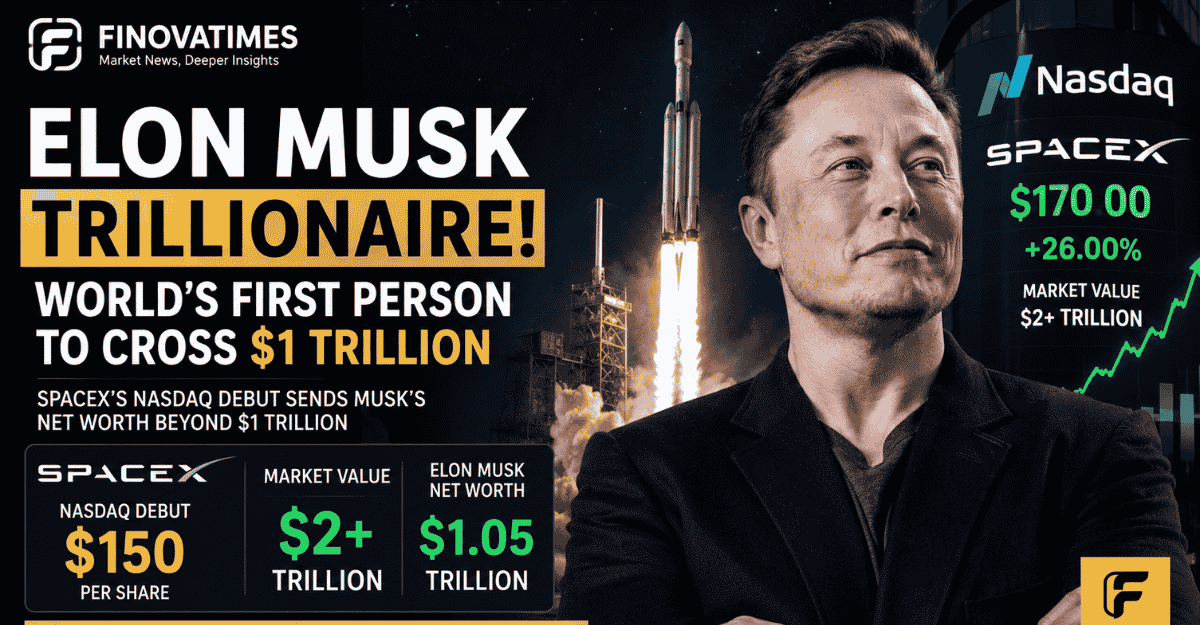
Elon Musk Trillionaire Net Worth crosses $1 trillion after SpaceX’s Nasdaq debut, making him the first trillionaire in modern history.
Elon Musk Trillionaire Net Worth Surpasses $1 Trillion
The global business world witnessed a historic financial milestone on Friday as Elon Musk officially became the first person in history to surpass a net worth of $1 trillion. The achievement came after SpaceX made its long-awaited debut on the Nasdaq, instantly becoming one of the most valuable publicly traded companies in the world.
The landmark moment not only reshaped global wealth rankings but also intensified conversations about innovation, economic power, and wealth inequality in the modern technology era.
Key Points
SpaceX debuted on Nasdaq at $150 per share.
Elon Musk’s net worth crossed $1 trillion.
SpaceX is now valued at over $2 trillion.
Thousands of SpaceX employees became millionaires.
SpaceX IPO Pushes Musk Into the Trillion-Dollar Club
SpaceX opened trading at $150 per share during its Nasdaq debut, attracting strong investor demand from the opening bell. Shares quickly gained momentum and rose nearly 26% during the trading session, reaching approximately $170 per share.
The rally pushed SpaceX’s market valuation beyond $2 trillion, making it one of the most valuable companies ever listed on a U.S. stock exchange.
As the company’s largest shareholder, Elon Musk benefited the most from the historic public offering. His SpaceX stake is now estimated to be worth more than $766 billion.
When combined with his Tesla holdings, valued at roughly $280 billion, Musk’s total fortune has climbed to approximately $1.05 trillion, according to market estimates.
The SpaceX IPO alone added more than $180 billion to Musk’s personal wealth, making it one of the largest single-day increases in personal net worth ever recorded.
A Remarkable Wealth Journey
The rise of Elon Musk Trillionaire Net Worth is one of the most extraordinary financial success stories of the 21st century.
Just over a decade ago, Musk was considered a successful entrepreneur with a fortune estimated at around $2.4 billion. At the time, both Tesla and SpaceX were still proving their business models and facing significant challenges.
Over the years, Tesla transformed the automotive industry by accelerating the adoption of electric vehicles, while SpaceX revolutionized the commercial space sector through reusable rocket technology and satellite-based internet services.
The growth of both companies created immense shareholder value and turned Musk into the wealthiest individual on the planet.
His fortune crossed the $100 billion mark in the early 2020s and continued expanding at an unprecedented pace as investors rewarded his companies’ innovation and long-term growth potential.
SpaceX Becomes a Wall Street Giant
SpaceX’s public market debut represents a significant milestone for the aerospace industry.
For years, the company remained privately held while building a dominant position in commercial space launches, satellite communications, and government contracts. Through programs such as Starlink and advanced rocket systems, SpaceX established itself as a leader in the rapidly growing space economy.
The company’s Nasdaq listing now gives retail and institutional investors direct exposure to one of the world’s most influential technology businesses.
Analysts believe SpaceX’s valuation reflects investor confidence in future growth opportunities across satellite internet, deep-space exploration, defense contracts, and commercial transportation services.
Wealth Inequality Debate Returns to the Spotlight
While many investors celebrated the achievement, Elon Musk’s trillion-dollar milestone has also renewed debate over wealth inequality in America and around the world.
Supporters argue that Musk’s wealth reflects decades of innovation, entrepreneurship, and risk-taking. They point to his role in advancing electric vehicles, renewable energy, artificial intelligence, and space exploration.
Critics, however, believe such extreme concentrations of wealth highlight growing economic disparities and raise questions about taxation, corporate influence, and economic fairness.
The discussion is expected to intensify as technology founders continue to accumulate unprecedented levels of wealth through ownership stakes in highly valued companies.
Thousands of New Millionaires Created
The SpaceX IPO did more than create the world’s first trillionaire.
Thousands of employees who received stock compensation during the company’s private years have also benefited from the public listing. Many early workers have reportedly become millionaires, while several senior executives and long-term investors have entered billionaire status.
The event demonstrates how successful technology companies can generate wealth not only for founders but also for employees and shareholders who participate in their growth.
What Comes Next?
Investors will now closely monitor whether SpaceX can maintain its extraordinary valuation and continue delivering strong growth.
The company remains heavily involved in satellite communications, lunar missions, reusable launch systems, and future Mars exploration projects. Continued success in these areas could further strengthen its position as a dominant force in the global technology and aerospace sectors.
For Elon Musk, however, the latest milestone has already secured a place in financial history.
Conclusion
The emergence of Elon Musk as the world’s first trillionaire marks a defining moment in modern business history. Fueled by SpaceX’s blockbuster Nasdaq debut and supported by Tesla’s continued market strength, Musk’s fortune has crossed a threshold once thought impossible.
Whether viewed as a triumph of innovation or a symbol of widening wealth inequality, the trillion-dollar milestone reflects the extraordinary impact that technology companies now have on the global economy.
Source References: This article is based on publicly available information regarding SpaceX’s Nasdaq debut, market valuation estimates, Tesla share performance, and billionaire wealth rankings. Financial figures referenced in this report reflect market-based estimates available at the time of publication.
Editorial Disclaimer: Market valuations and net worth estimates fluctuate with stock prices and ownership disclosures. All wealth figures mentioned in this article are estimates and may change significantly based on market conditions.

Abdul Rehman is the founder and editor of FinovaTimes a digital-first financial media platform covering global markets, artificial intelligence, investing, business, and economic trends.
With a strong focus on modern financial journalism and data-driven storytelling, he specializes in translating complex market developments into clear, accessible insights for a global audience. His editorial work spans AI innovation, Wall Street trends, stock market analysis, macroeconomics, and emerging technologies shaping the future of finance.
Under his leadership, FinovaTimes has developed a modern newsroom approach inspired by leading global financial media brands, combining real-time reporting, high-impact digital publishing, and audience-focused financial content.
His work emphasizes clarity, credibility, and forward-looking analysis across the rapidly evolving global economy.